If your goal is smoother, more hydrated and healthier-looking skin rather than changing the shape of your face, you may have come across skin boosters.
Skin boosters are injectable treatments designed primarily to improve aspects of skin quality, such as hydration, texture and elasticity. Many contain hyaluronic acid, although the exact formulation can vary significantly between products.
Unlike traditional dermal fillers, which are often used to add volume or enhance facial contours, skin boosters are generally intended to improve the quality and appearance of the skin itself.
So, how do they work, what can they help with, and how are they different from other injectable treatments?
So, how do Skin Boosters work?
“Skin booster” is a broad aesthetic term rather than the name of one standardised treatment. Different products can contain different ingredients and may be administered using different injection techniques.
Hyaluronic acid is a common ingredient in many skin boosters. It is a naturally occurring substance found in the body, including the skin, and has water-binding properties.
With hyaluronic-acid-based skin boosters, small amounts of the product are injected within or beneath the skin according to the intended technique. The aim is generally to improve hydration and other aspects of skin quality without creating the more noticeable volume associated with traditional fillers.
Because formulations differ, it's important to know exactly which product is being recommended, what it contains and what it is designed to achieve.
What can skin boosters help with?
Depending on the product and your individual skin concerns, skin boosters may be considered for:
- Dehydrated-looking skin
- Dullness
- Fine lines
- Rough or uneven texture
- Reduced elasticity
- Crepey-looking skin
They aren't a solution for every skin concern. Significant pigmentation, active acne or deeper acne scars, for example, may require a different treatment approach.
A skin assessment can help determine whether a skin booster actually matches the concern you want to improve.
Where can Skin Boosters be used?
The face is one of the most common areas treated with skin boosters. Depending on the specific product and its intended use, treatment may also be considered for areas such as the:
- Neck
- Décolletage
- Hands
These areas can develop visible changes related to ageing, sun exposure and declining skin quality.
Not every injectable is appropriate for every area, so treatment should be planned around the specific product rather than assuming all skin boosters can be used in the same way.
How is Skin Booster different from Derma Fillers?
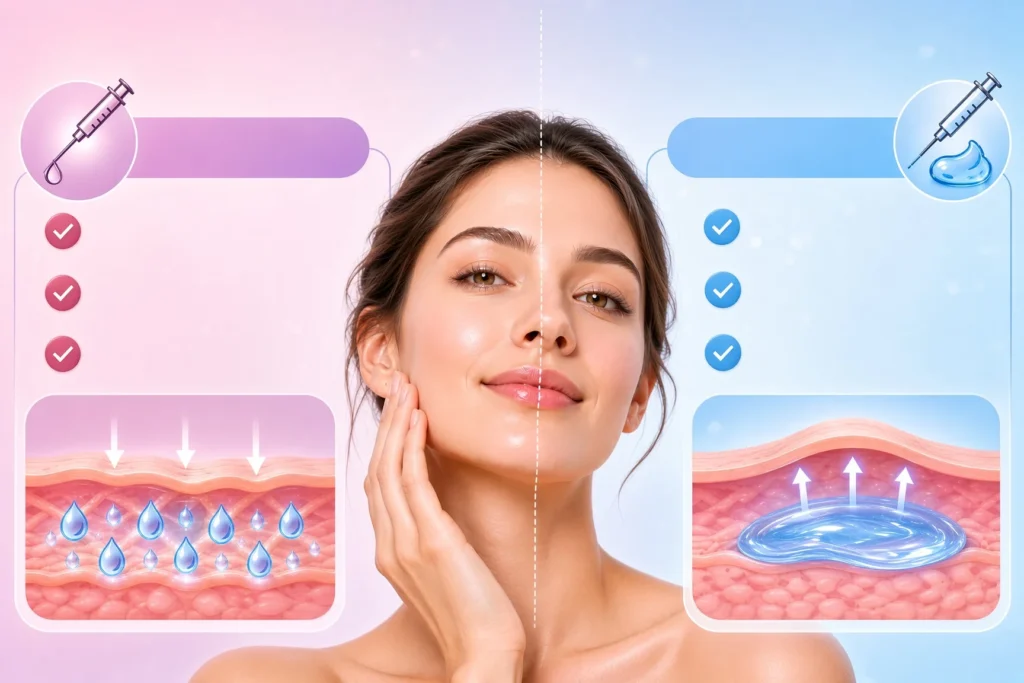
Skin boosters and dermal fillers can both contain hyaluronic acid, which is why they are sometimes confused. However, their main purposes are generally different.
Dermal fillers are often designed to provide volume, projection or structural support and may be used to enhance areas such as the lips, cheeks, chin or jawline.
Skin boosters, on the other hand, generally focus on hydration and overall skin quality. Small amounts of product may be distributed across a wider treatment area rather than being used to create significant facial volume or contour.
The distinction isn't always absolute because injectable products vary considerably. What matters most is the specific product, its formulation and what it is designed to achieve.
How are Skin Boosters different from Botox and Profhilo?
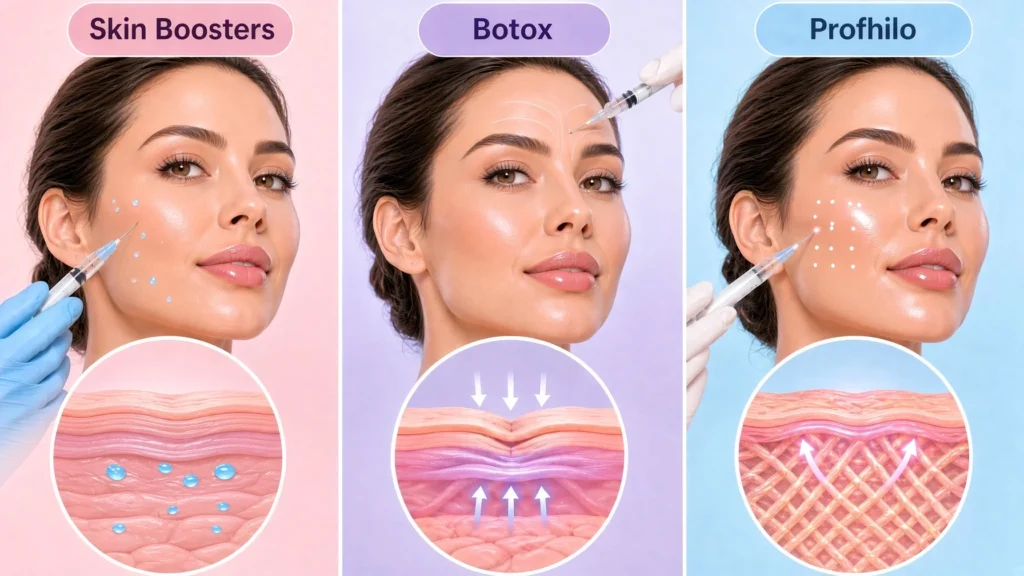
Skin boosters and Botox work in very different ways.
Botulinum toxin temporarily reduces activity in selected muscles and is commonly used for dynamic expression lines such as forehead lines, frown lines and crow's feet.
Skin boosters don't work by relaxing muscles. Their focus is primarily on improving aspects of skin quality.
Profhilo is another injectable treatment commonly discussed alongside skin boosters. It contains hyaluronic acid but has its own formulation and injection protocol.
Because products marketed as skin boosters can have different ingredients, concentrations and treatment schedules, don't assume that every injectable described as a skin booster works in exactly the same way.
Before treatment, consider asking:
- What product will be injected?
- What is it designed to treat?
- How will it be administered?
- How many treatments are recommended?
- What results can realistically be expected?
- What risks are associated with the treatment?
What happens during a Skin Booster treatment?
Your treatment should begin with a consultation to assess your skin, medical history and goals.
Your practitioner may ask about:
- Your current skin concerns
- Previous aesthetic procedures
- Medications
- Allergies
- Medical history
- Your expectations from treatment
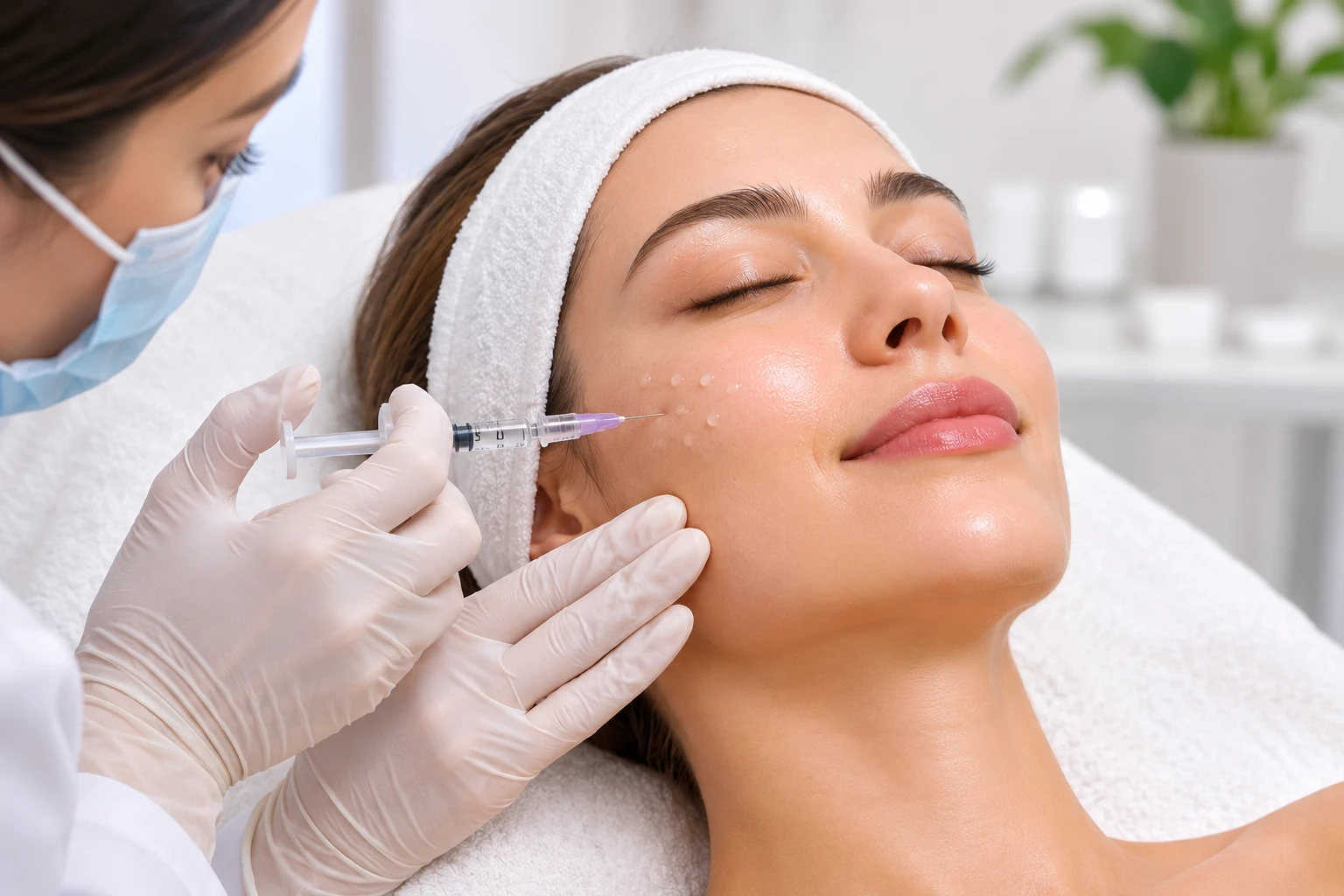
The skin is then cleansed, and the product is usually administered through multiple small injections. The exact injection technique and treatment time depend on the product and area being treated.
Because several injections may be required, some discomfort is possible. The sensation varies according to the treatment area, your sensitivity, the product and injection technique. Some products contain lidocaine, while a topical anaesthetic may sometimes be used when appropriate.
What can you expect after Skin Booster injections?
Temporary changes around the injection sites are common after treatment and may include:
- Small raised bumps
- Redness
- Swelling
- Tenderness
- Bruising
Small bumps from superficial injections may remain visible temporarily before settling. How quickly they disappear depends on the product, technique and individual response.
This is worth considering if you're planning treatment shortly before a wedding, holiday or other important event.
When will you see results after Skin Boosters and how many sessions do you need?
There isn't one timeline or treatment schedule that applies to every skin booster.
Some people may notice changes in hydration relatively early, while improvements in other aspects of skin quality may develop more gradually.
Similarly, some products are administered as an initial course of several treatments followed by maintenance, while others follow different protocols.
Your recommended schedule may depend on:
- The product being used
- Treatment area
- Skin condition
- Age
- Treatment goals
- Individual response
If several sessions are recommended, don't judge the final outcome immediately after your first treatment. Your practitioner should explain the expected timeline and treatment schedule for the specific injectable being used.
How long do Skin Booster results last?
How long the results last varies between products and individuals.
Hyaluronic-acid-based injectable materials are gradually broken down by the body, so visible improvements aren't expected to last indefinitely.
The duration may be influenced by:
- Product formulation
- Treatment area
- Number of treatments
- Skin characteristics
- Lifestyle factors
- Individual metabolism
Maintenance treatments may be recommended if you want to sustain the effect.
Who may not be suitable for Skin Boosters?
Suitability depends on both the specific product and your individual medical circumstances.
Before treatment, tell your practitioner about:
- Pregnancy or breastfeeding
- Allergies
- Current medications
- Blood-thinning medicationBlood-thinning medication
- Previous injectable treatments
- Active skin infections
- Medical conditions
- Previous reactions to injectable products
Depending on your circumstances, treatment may need to be delayed or avoided.
Can Skin Boosters help with acne scars?
Skin boosters shouldn't automatically be considered a primary treatment for acne scars.
Acne scars can vary considerably in type and severity. Depending on the type of scarring, treatments such as microneedling, laser resurfacing, subcision or other procedures may be more appropriate.
The first step should be identifying the type of acne scarring you have before deciding which treatment to consider.
Can Skin Boosters replace your skincare routine?
No. Skin boosters should complement good skincare rather than replace it.
Even if you choose professional treatments, your routine should still include:
- Gentle cleansing
- Appropriate moisturisation
- Daily sun protection
- Suitable evidence-based active ingredients when appropriate
Think of skin boosters as one possible part of a broader approach to improving skin quality, not a substitute for looking after your skin every day.
Skin boosters can be an option if you're looking to improve hydration, texture and overall skin quality without significantly changing your facial contours. However, results can vary depending on the product used, your skin concerns and how your skin responds to treatment.
Since not every skin booster works in the same way, choosing the right treatment starts with understanding what your skin actually needs. Call us today to at +971 4 566 3377 to book a consultation with our aesthetic team to assess your skin concerns and create a personalised treatment plan based on your skin type and goals.